

The Tabernacle tree
In the days of the Old Testament, the High Priest was the only one who could enter the section of the tabernacle called the Holy of Holies, where the presence of God dwelt. The Holy of Holies was separated from the rest of the tabernacle by a curtain. Bells fastened to the hem of the High Priest’s garment told those outside the Holy of Holies that the priest was alive in the presence of God. “The sound of the bells will be heard when he enters the Holy Place before the Lord and when he comes out, so that he will not die.” (Exodus 28:35).
In between each bell was also sewn in pomegranates of blue, purple, and scarlet yarn (Exodus 28:33). Throughout the Old Testament, pomegranates are used as a symbol for fruitfulness, obedience, and covenant blessing. King Solomon decorated the pillars of his temple with 200 bronze pomegranates (1 Kings 7:20). Prophets such as Joel and Haggai used pomegranates as a symbol for the nation of Israel’s wealth and prosperity (Joel 1:12, Haggai 2:19).
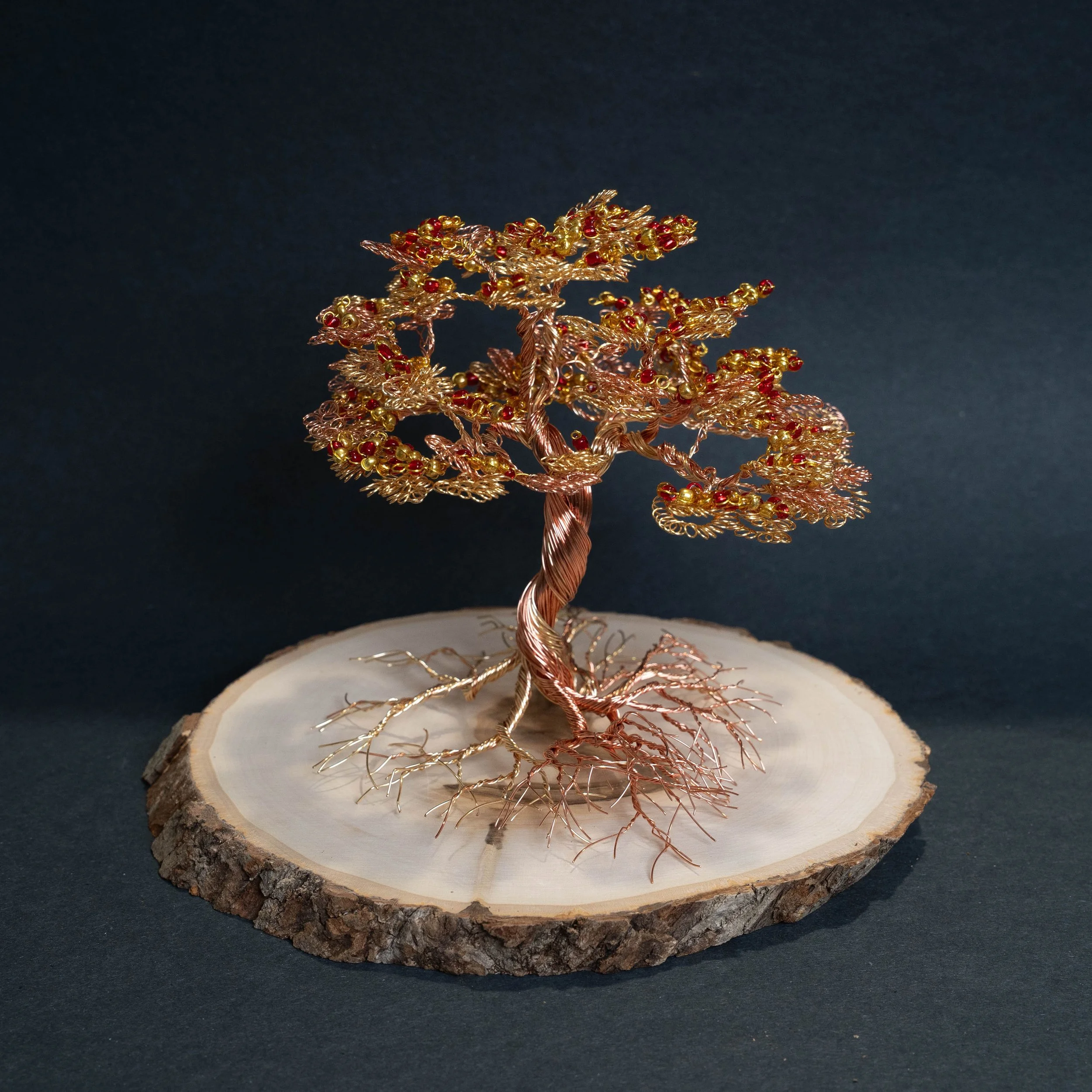
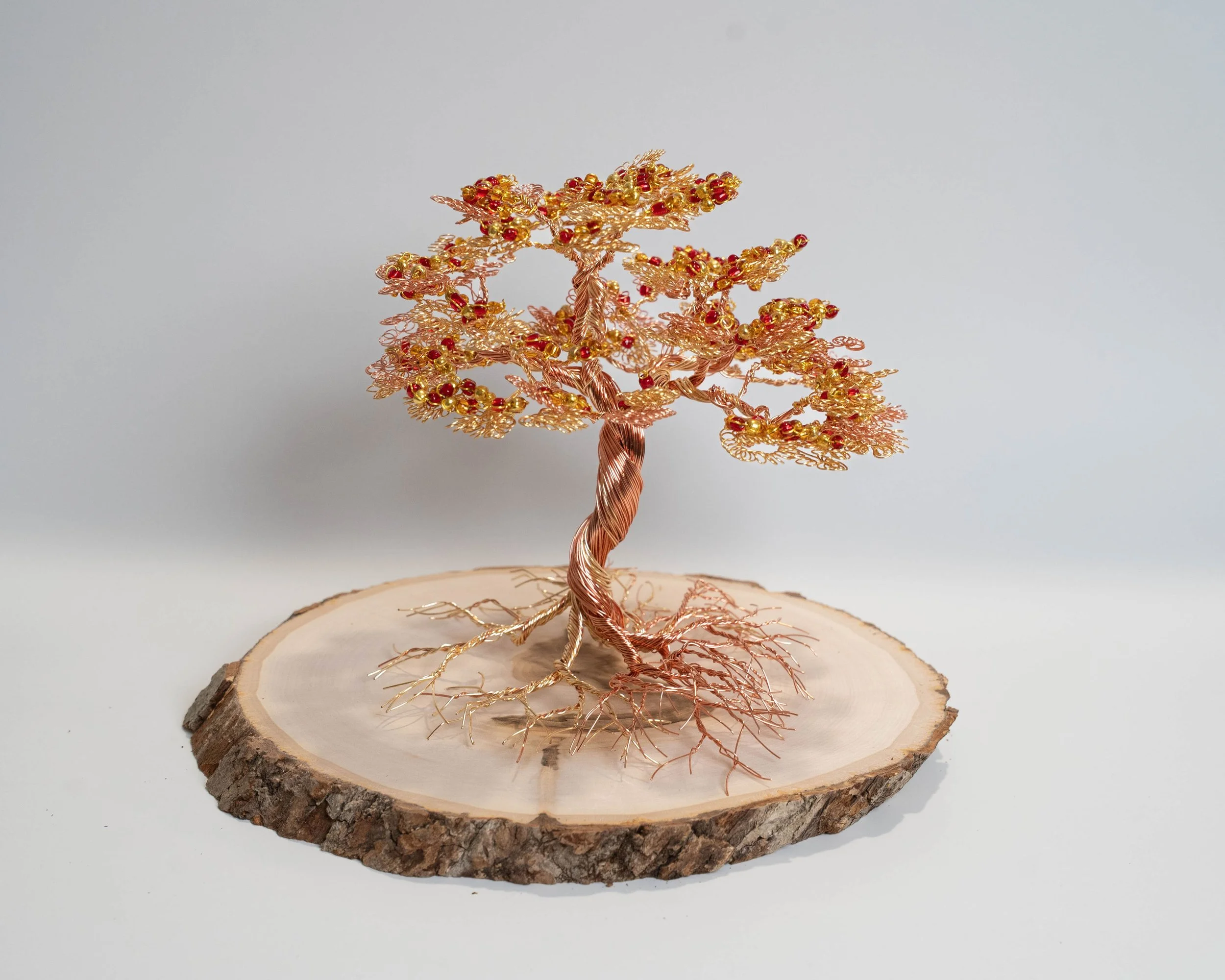
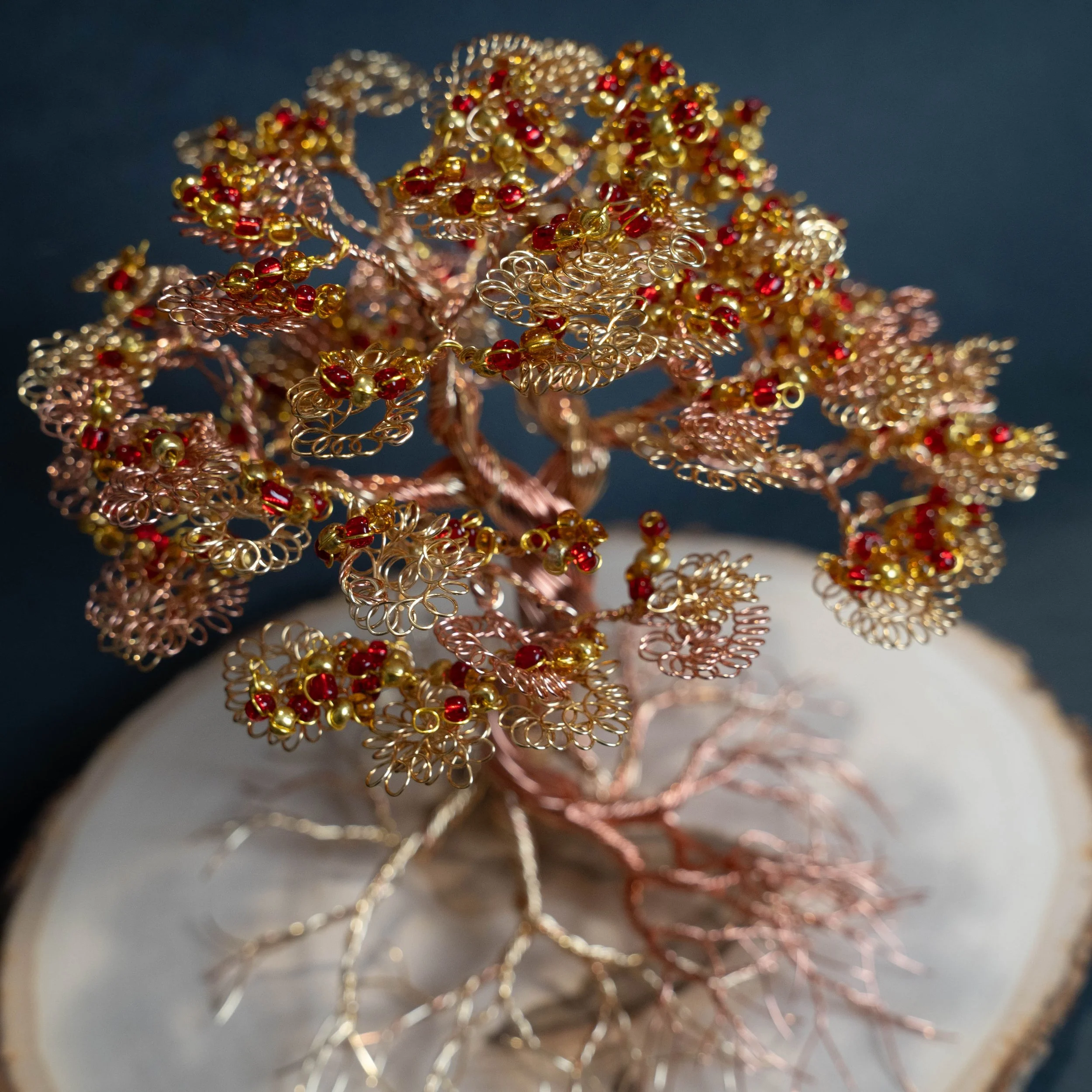
The gold beads on this tree recall the bells, whose sound testified to the priest’s living and active ministry before the Lord. The red beads represent the pomegranates, the abundance that comes from honoring the covenant.
Once Jesus died, the curtain was torn, allowing us to stand in the presence of God, blameless and without impurity through the blood of Jesus.
“Therefore, brothers, since we have confidence to enter the Most Holy Place by the blood of Jesus, by the new and living way opened for us through the curtain of His body, and since we have a great priest over the house of God, let us draw near with a sincere heart in full assurance of faith, having our hearts sprinkled to cleanse us from a guilty conscience and our bodies washed with pure water.” Hebrews 10:19-22
I pray this tree serves as a reminder that Jesus is our Great High Priest, allowing us to enjoy the blessings of God and enter His presence without shame.
minis
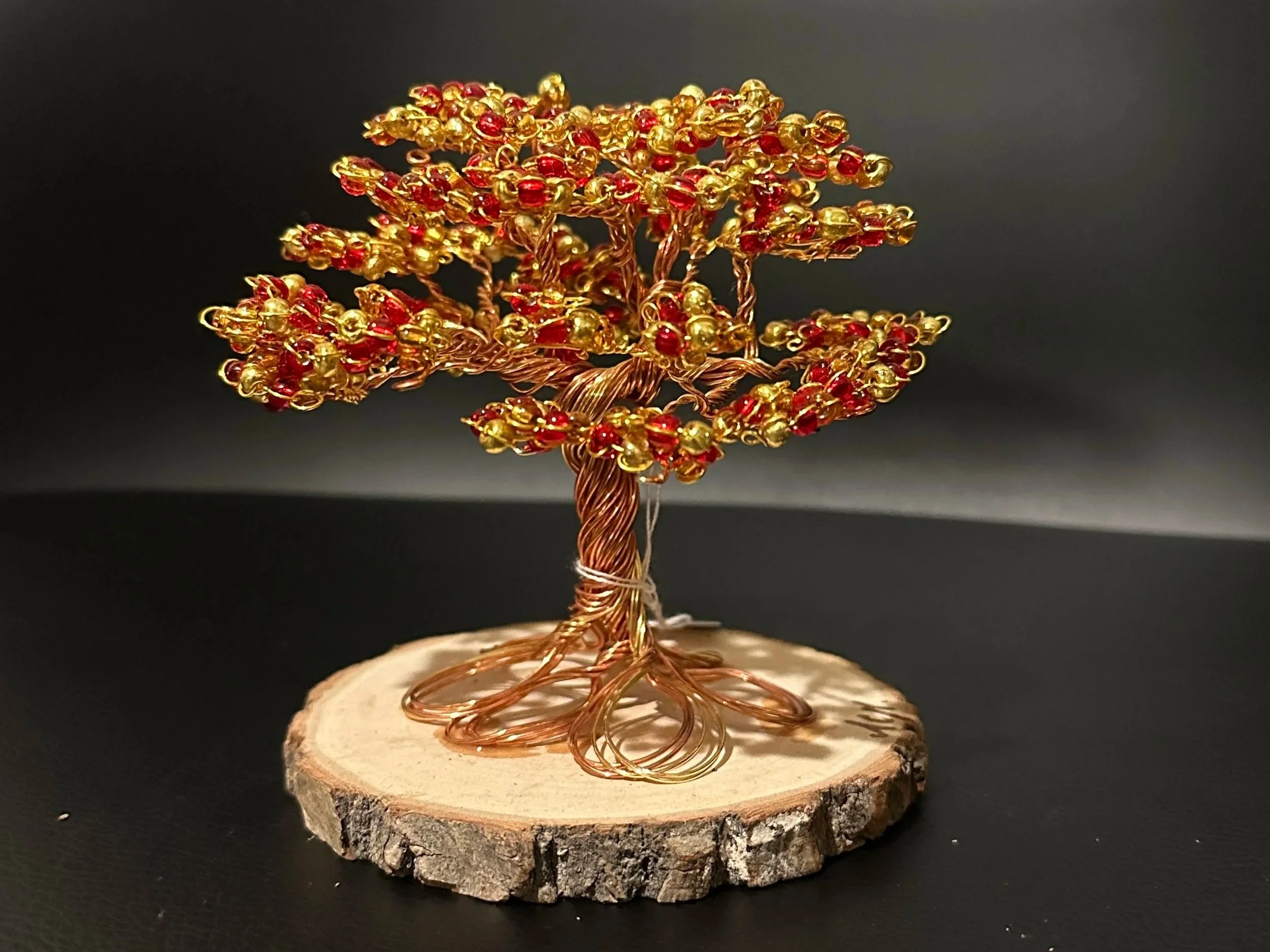
The same deep meaning, just a little more petite.
